Your ERP is one of the most expensive tools in your operation. It tracks every transaction, every order, every cost, every movement through your facility. The data is in there — all of it.
So why is it still so hard to answer a simple question?
Ask most business owners how a specific product line performed last month and the answer isn't a number. It's a process. Someone has to pull a report. Export it to Excel. Cross-reference it with another file. Clean it up. Send it over. And by the time the answer lands in your inbox it's already a week old.
That's not a technology failure. That's a design problem.
ERPs are built to record, not to decide.
The people who built your ERP were solving a data storage problem — how do we capture every transaction accurately and keep it organized? They solved it. But recording data and surfacing meaning from that data are two completely different jobs, and ERPs were never designed to do the second one.
The result is a system that knows everything about your business and volunteers nothing. The information you need is buried somewhere in there, locked behind reporting tools that require time, expertise, and a specific set of questions just to get a straight answer.
Meanwhile your business keeps moving.
The real cost isn't the time spent pulling reports.
It's the decisions that get made without the right information. The margin problem that wasn't caught until month-end. The product line that's been quietly underperforming for two quarters. The cost that crept up slowly enough that nobody flagged it.
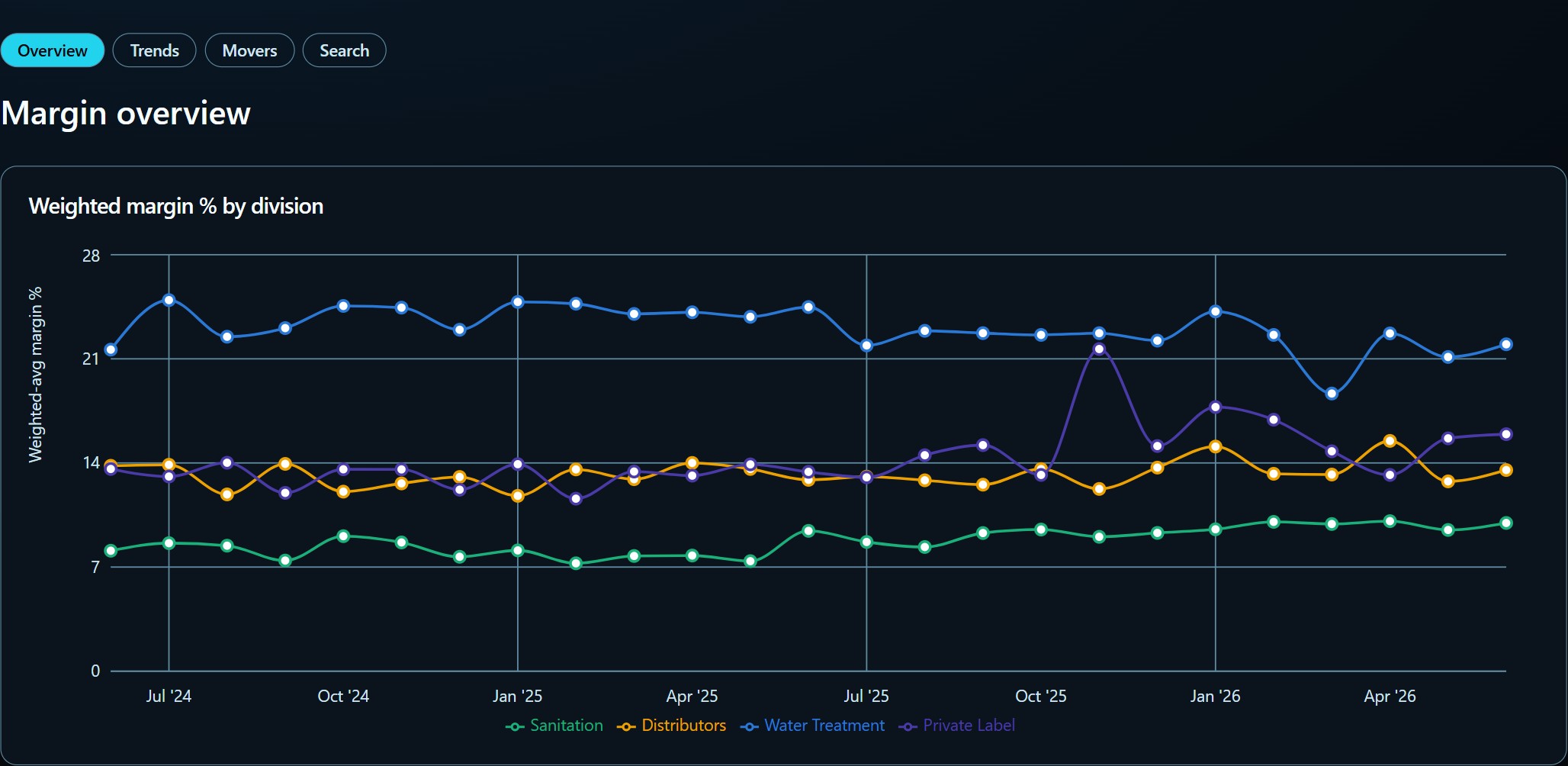
When your data isn't surfaced, your business runs on instinct. Sometimes instinct is right. But instinct doesn't scale, and it doesn't compound.
What needs to change isn't your ERP.
You don't need a new system. You need a layer on top of the one you have — something that takes the data your ERP already captures and organizes it into answers. Not reports you have to run. Answers that are just there, updated and waiting, every time you need them.
That's the gap between recording your business and understanding it.